In our previous analysis, we explored the global landscape of perfumes and cosmetics and the rapid and critical changes in regulatory environment of the industry. It becomes increasingly clear that successful beauty expansion requires more than strong products — it requires a right distribution strategy.
In our guide on How to Choose the Right Distribution Strategy, we describe how brands can determine whether intensive, selective, or exclusive distribution is best aligned with their positioning and ambitions.
Within this context, Weitnauer Group shares its insights into the moments when exclusive distributors in the premium beauty matters most for beauty brands. Supported by a diverse portfolio of premium brands and exclusive partnerships worldwide, we explore the role of exclusive distributors, how they operate, and why they remain critical across both domestic and travel retail sectors.
What Is an Exclusive Distributor?
According to the previous article, an exclusive distributor is a partner granted the sole rights to represent, market, and sell a brand within a defined territory or retail channel.
This controlled model centralises all key commercial and operational functions, including:
- importation and customs
- warehousing and stock rotation
- pricing and commercial planning
- retailer relationships and sell-in
- in-store activation and merchandising
- regulatory compliance and documentation
- forecasting, reporting, and market insights
Instead of splitting responsibility across several wholesalers, the brand works with one partner that manages importation, customs clearance, warehousing, commercial planning, sales, and brand activation end-to-end.
For beauty brands, this single-point ownership reduces fragmentation, strengthens pricing integrity, and ensures consistent execution across markets.
Why Exclusive Distribution Matters in Premium Perfume & Cosmetics
Exclusive distribution is widely used across the beauty sector because the category relies on brand storytelling, sensory experience, and controlled environments. Below are the three core reasons exclusivity creates measurable value.
1. Protecting Premium Brand Positioning
Luxury segment of Perfume and cosmetics brands compete through identity – packaging, visual presence, pricing, and overall storytelling (McKinsey, 2025).
Without controlled distribution, brands risk:
- grey-market diversion
- price erosion and discount misalignment
- uneven retail visibility
- inconsistent brand voice across markets
- uncoordinated promotional campaigns
Exclusive distribution protects brand equity, ensuring that every touchpoint – from duty-free counters to domestic retailers – aligns with the intended positioning.
Weitnauer Group not only maintains brand positioning, but also continuously builds brand equity through local activations, collaborations with major events, and targeted consumer touchpoints.
By engaging directly with the audience—listening to their needs and shaping relevant experiences—we strengthen brand awareness and reinforce top-of-mind perception across each region. A strong example of this approach can be seen in the work of Weitnauer Türkiye.
2. Ensuring Consistent Retail Execution
In beauty, the point of sale is where brand experience becomes tangible. Conversion depends on:
- trained promoters and fragrance consultants
- correct merchandising and planograms
- testers, displays, and gifts-with-purchase
- seasonality-driven animations
- reliable product availability
Exclusive distributors coordinate these elements centrally, ensuring that fragrance and cosmetics lines appear consistently across retailers, regions, and travel retail hubs.
For instance, our synergy across Uruguay, Paraguay, and Brazil enables us to build a consistent and aligned brand image throughout the region.
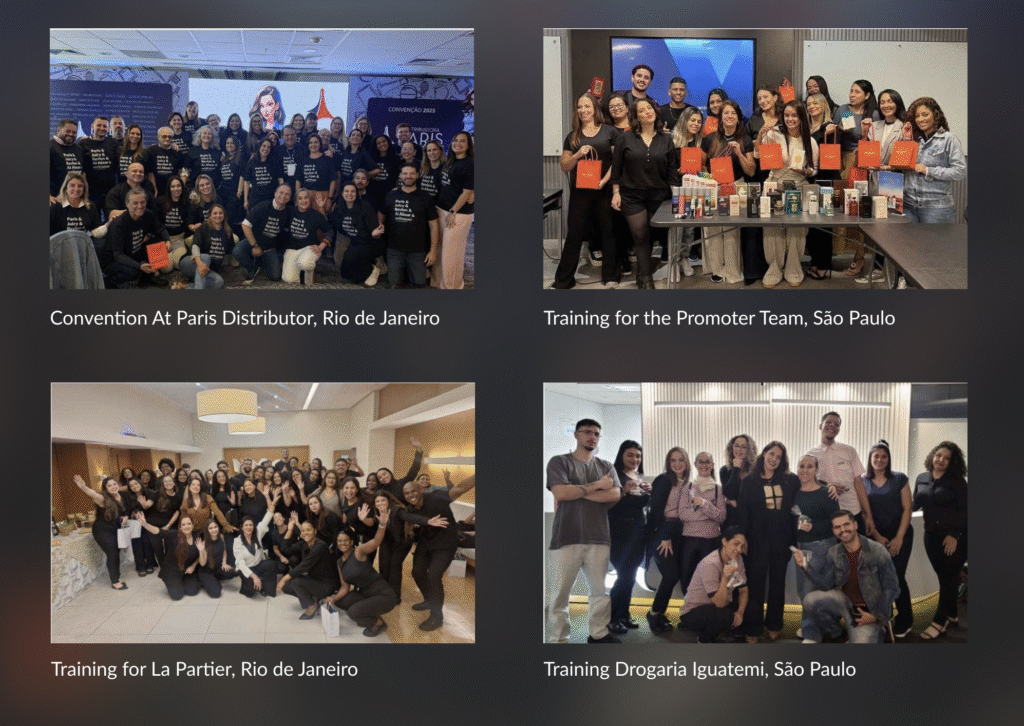
In Weitnauer do Brasil alone, more than 1,000 people are trained annually, where we apply storytelling-based learning to empower sales teams and brand representatives. This approach equips them to deliver compelling product stories and create meaningful connections with end consumers.
3. Navigating Regulatory and Cultural Complexity
Perfume and cosmetics are among the most regulated consumer goods categories. Requirements vary widely across borders. An exclusive distributor provides the advantage of:
- market-specific regulatory expertise
- local consumer insights
- understanding of retailer operations and constraints
- alignment with regional pricing architecture
- forecasting adapted to seasonality and cultural patterns
In regions where markets develop at different speeds, this localised expertise is essential for sustainable expansion.
Weitnauer Group does not relocate teams from Europe; instead, we hire local talent with deep market knowledge and cultural understanding. It is our philosophy of global reach, local trust that allows brands to grow authentically and sustainably across 4 continents.
What Exclusive Distributors Do Across the Beauty Value Chain
Exclusive distribution is not limited to logistics; it integrates commercial, operational, and brand-building capabilities. Below is a clear breakdown optimised for search intent around “perfume distributor responsibilities” and “cosmetics distribution model.”
1. Market Entry and Commercial Growth
A strong exclusive distributor helps brands build a long-term, data-driven route to market through:
- opportunity assessment and segmentation
- channel and retailer selection
- pricing architecture and margin structures
- launch calendars and activation planning
- structured forecasting and replenishment cycles
This structured approach ensures that brands enter new markets with a coherent, scalable strategy.
2. Supply Chain and Operational Excellence for Beauty Products
The beauty category requires precision in handling, rotation, and temperature control. Exclusive distributors offer:
- professional warehousing with suitable conditions
- demand planning and inventory optimisation
- controlled replenishment for domestic and travel retail
- expiry monitoring and quality assurance
- bonded warehouse operations for duty-free hubs
This ensures availability, freshness, and compliance — all essential for beauty category performance.
3. Brand Building, Merchandising, and Retail Presence
Exclusive distributors manage the on-the-ground execution that connects global brand identity to local consumer experience:
- POS visibility
- merchandising and display maintenance
- seasonal animations and gifting programs
- staff training and brand education
- influencer or digital collaboration (where relevant)
- retailer negotiations for improved visibility
This ensures that the brand’s narrative is delivered seamlessly and consistently across channels.
Exclusive vs Other Distribution Models
Beauty brands typically evaluate three distribution strategies:
| Distribution Model | Description | Ideal Use Case |
|---|---|---|
| Intensive Distribution | Broad distribution across many wholesalers and retailers | Mass-market, affordable beauty and cosmetics brands |
| Selective Distribution | Limited number of authorized retailers or distributors | Mid-range and premium brands balancing reach and exclusivity |
| Exclusive Distribution | Single distributor or partner with sole rights in market/channel | Luxury, prestige, and niche beauty brands requiring controlled environments |
Conclusion: Why Exclusive Distribution Remains Essential for Premium Beauty Brands
Exclusive distributors play a central role in the premium perfume and cosmetics sector by ensuring controlled growth, protecting pricing and brand equity, and delivering a unified retail experience across diverse markets.
Weitnauer Group — with our travel retail pioneering experience and long-standing role as an international B2B distributor — continues to redefine how beauty brands grow across markets. By bridging global ambition with local execution, we elevate distribution into a strategic partnership that delivers visibility, loyalty, and long-term brand equity.